When you’re in an emergency situation, the first thing you do, of course, is call 911. But, it’s often hard to remain calm and think straight in the middle of an emergency. While it is important to explain the situation and say who you are, it’s even more important to first tell the dispatcher where you are.
It may seem like in 2017, when GPS is integrated into every device we come in contact with, that 911 dispatchers should be able to figure where we are—whether or not we actually tell them. But, that is not the case. According to the FCC, 911 calls from mobile phones pose unique challenges.
First, because cell phones are mobile, they are not associated with an exact location or address, like a landline phone would be. The location of the cell site closest to the caller can give the operator a general idea of where you’re calling from, but it’s not specific enough to send help quickly.
Second, cell phones can drop calls and there have even been cases where subscribers of certain cell services were simply unable to call 911. It happened with AT&T earlier this year and Verizon Wireless in 2015.
In a situation where your call was dropped or the 911 service became unavailable, if the dispatchers heard your location before the drop, they would likely still able to send help.
After telling the dispatcher your exact location, give them your phone number. Telling them your number will ensure that if your call were to drop or if, in the haze that is an emergency situation, you accidentally hang up the phone, the dispatcher can call you back.
Once your location and phone number is established, tell the dispatcher your name and explain the situation.
Remaining calm is important, as it helps the dispatcher understand what is happening, so he or she can send the correct help as quickly as possible.
Providing all of the relevant details in an emergency situation can be quite difficult, but if you can at least remember what to say first, it could literally mean the difference between life and death.
Read more at: http://bit.ly/2oyTFwl
Wednesday, March 29, 2017
The First Thing You Need To Say When Calling 911 From Your Cell Phone


Monday, March 27, 2017
Will Trackhawk make 700 hp?
Even before the first Hellcat-equipped Dodge Challenger was shown to the public, there has been speculation on what a Jeep Grand Cherokee Trackhawk with a Hellcat would be like.
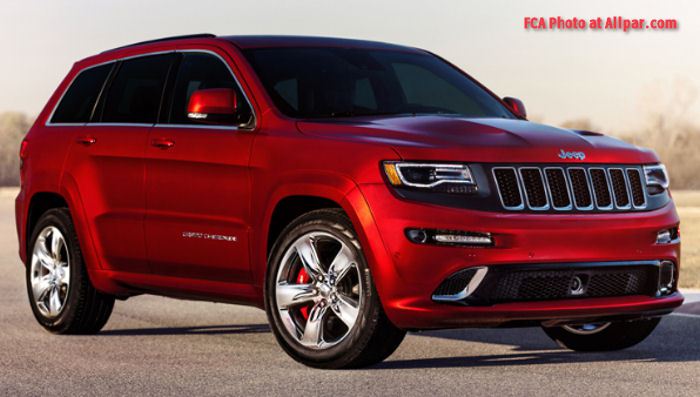
(Grand Cherokee SRT shown.) At first, we were told that the Trackhawk might not even be produced, because the Grand Cherokee is an upscale car and the engine was just too noisy; but the Hellcat is quieter than it was when in development trim, and that’s no longer a major issue. Nor is the supply of key parts.
At first, we assumed that the engine was have to be downrated rather dramatically to make all wheel drive possible. How tough can you make the transfer case and still have it fit under the car? We speculated that it would end up at around 640 horsepower, based on the capacity of existing components from various parts makers.
Now, though, reliable sources have posted that the system will make a full 700 horsepower. That means either they’ve found tougher transfer cases (and other parts) that still fit in the Grand Cherokee and aren’t far too pricey; or that they’ve gone the “heavy-handed torque management” route.
Keep in mind, though, that the official rated horsepower might be lower, e.g. 680. That 700 might be an estimate, or a “roughly,” or even gross power (before accessories). Regardless, as we’ve said before, even the low-end estimate we originally had — 640 hp — would be far, far above the current, highly regarded 6.4 horsepower Grand Cherokee’s power.
There’s little sure information about the Hellcat Trackhawk for the moment. We are fairly sure that it will debut in New York City, taking its place alongside the Demon for the most powerful launch in automotive history; but we’ve seen nothing concrete yet.
Read more at: http://www.allpar.com/news/2017/03/will-trackhawk-make-700-hp-36922?utm_source=fballpar&utm_medium=social&utm_campaign=fballpar&utm_term=fballpar
Wednesday, March 22, 2017
Ram Longhorn to match trailers
Just ahead of the Dallas Auto Show, Ram announced a new “RV Match Brown” two-tone contrast color, replacing White Gold. The new color will be used on the lower body, wheel flares, painted bumpers, and running boards, with a bright chrome grille and contrasting tow hooks.
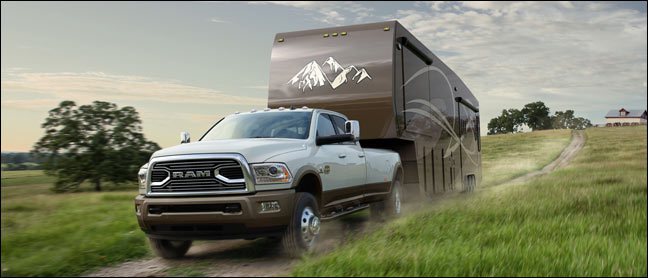
The winner of the “Luxury Truck of Texas” title is available in 1500, 2500, and 3500 forms. The latter has over 30,000 pounds of towing ability, which is why RV Match Brown was chosen — to closely match a shade frequently used on recreational travel trailers.
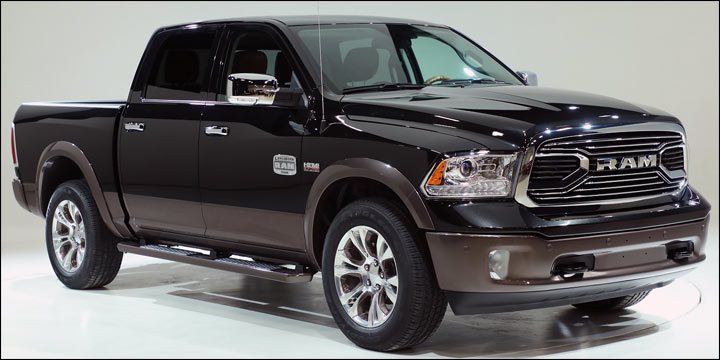
The Texas-influenced truck shows off its status with a chrome metal Laramie Longhorn badge with painted accents on the tailgate, and capacity-specific badges on the doors.

RV Match Brown can be paired with Black Forest Green, Bright Silver, Bright White, Brilliant Black Crystal, Delmonico Red, Maximum Steel, Pearl White, and True Blue. Ram Laramies are also sold with an optional Bright Silver twotone contrast and “non two tone” paint schemes.

The 2017 Ram 1500, 2500 and 3500 Longhorn have a new front-end look, including a bright chrome billet port grille with chrome belt moldings. The 2017 Ram 1500 Longhorn models also gained standard Keyless Go, SmartBeam headlights, and rain-sensing wipers. The heavy duty versions have a standard 6.4 Hemi V8; and the heavy duty 4x4s have Bilstein monotube shocks.
Read more at: http://www.allpar.com/news/2017/03/ram-longhorn-to-match-trailers-36878
Tuesday, March 21, 2017
10 bad driving habits that damage your car
You know how important regular oil changes, tire rotations, and changing drive belts are for keeping a car running smoothly and reliably for many years. Perhaps you have a calendar for taking care of routine maintenance tasks, but the way you drive on a daily basis has a significant impact on the longevity of your car and its components. Even experienced drivers have habits that cause unnecessary wear and tear on their vehicle. Left unchecked, these habits can lead to costly repairs or replacements that could otherwise be avoided.
These are 10 common bad driving habits that can cause major damage to your car:
Resting Your Hand on the Shifter: Unless you're actively changing gears, there's no reason to touch the shifter. Resting your hand on the shifter places weight on the transmission's bushings and synchronizers, causing internal wear. Keeping both hands on the steering wheel, and only taking one off to switch gears, is the best idea.
Not Using the Parking Brake: Neglecting to use the parking brake forces the entire weight of your vehicle to rest on the parking pawl, which is one little piece of metal within the transmission. Doing this could cause the parking pawl to eventually wear out and break, making "P" on your shifter effectively useless. Use the parking brake every time – there's really no reason not to.
Hauling Unneeded Weight: You may not drive a Lotus, but the phrase "simplify, and add lightness" applies to every car. We're not advocating stripping out sound deadening or removing the back seats, but you should clear out unneeded cargo from your car. Every pound of extra weight impacts fuel economy and handling, plus causes extra stress on suspension, brake, and drivetrain components. Give your interior and trunk a thorough clean so you're only carrying the essentials.
Only Keeping a Small Amount of Fuel in the Tank: Sometimes the cost of a full tank of gas doesn't fit into your budget, so you only add a gallon or two at a time. Most drivers don't know that this can lead to costly repairs further down the road. Modern fuel pumps are cooled by being submerged in fuel, so driving with only a small amount of fuel causes it to heat up and wear out more quickly. Keeping your gas tank at least a quarter full helps prevent this.
Hard Starts and Stops: This one's a no-brainer. Mashing on the gas can be fun, but uses significantly more fuel than gradually applying throttle. Sudden stops are sometimes necessary, but cause faster wear to the brake pads and rotors. Looking ahead, planning ahead, and pressing on the pedals smoothly is the best strategy.
Revving the Engine When It's Cold: It's not a bad idea to let the engine idle for a minute or two after a cold start. This helps it warm up and gives the oil some time to circulate. However, you should resist the urge to rev the engine when it's cold. Sure, the exhaust sounds great, but revving it when it's cold causes abrupt temperature changes that can damage components. It also causes undue wear on parts of the engine that haven't been lubricated by thorough oil circulation. Your engine will sound better, and rev more smoothly, once it's had a chance to warm up.
Riding the Clutch: You're at a stop light in your manual transmission car. You're pressing on the clutch, ready to drop it as soon as the light turns green. All that time spent waiting with the clutch in damages the pressure plate, release bearing, and release arm. Riding the clutch causes its surfaces graze against each other, wearing them down and opening the possibility for sudden failure. It's better to be stopped with the clutch out and shifter in neutral, only pressing the clutch and engaging gear when the light turns green.
Switching From Reverse to Drive Before Stopping Completely: When you're trying to fit into a tight parking spot, it's common to shift from reverse to drive while still slowly rolling backwards. This habit should be avoided at all costs. Doing so places strain on the drivetrain when it's suddenly forced to move in the opposite direction. Simply take that extra moment to make sure you're completely stopped before switching from reverse to drive.
Dragging the Brakes Downhill: Driving down a steep hill can be daunting, so you rest your foot on the brake pedal to be ready to slow down at a moment's notice. This causes strain and heat to build up in the brake system, wearing out components like brake pads and rotors. Instead, you should shift into a lower gear when you're driving downhill. This will cause engine braking, which helps slow the car down through natural drivetrain decompression. You'll find that engine braking can be as effective as regular braking in maintaining your downhill speed.
Ignoring Warning Signs: It's easy to ignore those little squeaks, intermittent rattles, or other unusual noises your car makes. Those sounds are warning signs that something's wearing out or about to go wrong. Don't wait to find out the cause of the noise, or it may make itself abundantly clear at the worst possible time. If your car is making strange sounds or giving you other warning signs, it's important to inspect the issue right away.
Bad habits can be hard to break, especially for seasoned drivers. Regardless of how much time you have behind the wheel, you care about taking care of your car and not wasting money on unneeded repairs. If you catch yourself doing any of these bad habits, thinking about the money you could save might motivate you to break them.
Read more at: http://www.autoblog.com/2016/09/08/10-bad-driving-habits-that-damage-your-car/?ncid=edlinkusauto00000016
Friday, March 17, 2017
5 Spring Maintenance Tips for Your Car
From potholes and road salt to ice and snow, winter weather puts stress on cars. Check out these spring auto maintenance tips.
Winter can be brutal on your car. In many areas of the country, drivers face snow storms, below-zero temperatures and pot holes – conditions not conducive for healthy cars.
Mechanics say spring is a good time to wash away the winter sludge and tune up your ride.
Here are five spring car maintenance tips to keep in mind:
1. Remove leftover salt
Salt, used on roads to melt ice and snow, can cause serious damage to cars, especially their undercarriages where metal can rust. Take your car to a highly rated car wash to eliminate salt, and check that the business has sprayers that clean the undercarriage.
2. Check alignment and suspension
Driving over potholes can damage your car’s alignment and suspension, says Scott McClure, owner of highly rated Westerville Automotive in Ohio. You might have a problem if you notice that the car pulls to one side or the steering wheel vibrates as you drive. An alignment check typically costs $25 to $40.
3. Change oil and check fluids
“If your last oil change was before winter, then this is a great time to do it,” says McClure. He adds that spring is also an ideal time to flush your transmission fluid. “It’s one of the most neglected services,” he says. “It’s a very costly repair - between $2,200 and $4,200 - if you have to rebuild or repair (a transmission).”
Mechanics recommend changing your car’s oil every 3,000 to 5,000 miles.
Don’t forget to check window washing fluid levels, as well as your brake and cooling system fluids.
4. Rotate tires and check air pressure
“You should check the tire pressure, including the spare should you ever need it,” says Leann Kinney, owner of highly rated Jeff’s Auto Service in Hopkins, Minnesota. “You car’s tires affect the ride, handling, traction and safety.”
Mechanics recommend tire rotation every 5,000 miles to keep tread wear even.
“One of the biggest issues we see is the front tires wearing out prematurely,” McClure says. “That can lead to handling issues. Tires aren’t cheap. They can go from $500-$600 for four new ones.”
5. Inspect brakes
Nothing, perhaps, is more important than having brakes that function properly. Have a technician check the pads and rotors to ensure there are no safety issues. Neglecting them can lead to a costlier repair down the line.
Read more at: https://www.angieslist.com/articles/5-spring-maintenance-tips-your-car.htm


